Quick answer
To know what to do in Holbox by golf cart, separate two worlds. On land, the cart takes you along the sand streets to the center, to Punta Mosquito, and to Punta Cocos, the beaches at the end of the island. On water, everything else —Isla Pájaros, Isla de la Pasión, the whale shark in season, and the bioluminescence— is done by boat, inside the Yum Balam Biosphere Reserve. KORU RENT is preparing its arrival in Holbox with golf carts, scooters, and quads.
What do you cover by golf cart and what by boat?
The distinction is key to planning your days. The golf cart is for land: the town, its beaches, and the two ends reachable over the sand, Punta Mosquito to the east and Punta Cocos to the south. In contrast, Holbox's natural stars are in the water and are only reached by boat with local operators: Isla Pájaros, Isla de la Pasión, Yalahau Lagoon, swimming with the whale shark in season, and the nighttime bioluminescence tours. No cart reaches those spots; no boat travels the town's streets. With that clear, you build a realistic itinerary.
By golf cart: the center, Punta Mosquito, and Punta Cocos
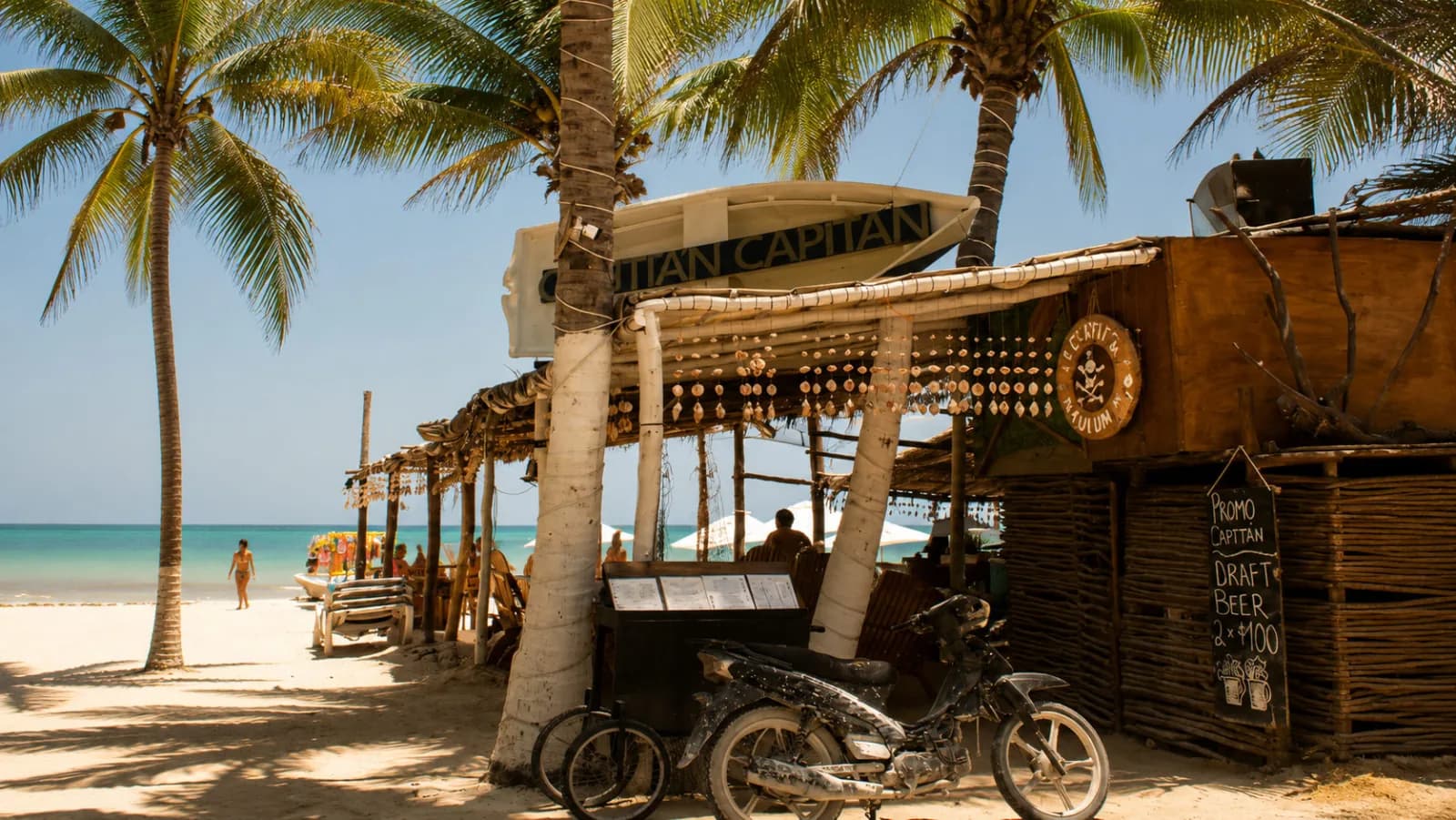
Holbox's center is the starting point: the square, the murals, the sand streets with restaurants, and the main beach, all a step away. From there, by cart, you head to Punta Mosquito, a long sandbar to the east famous for its birds —pelicans, herons, and, with luck, flamingos— and its shallow, mirror-like waters. To the south, Punta Cocos is the quietest, most pristine beach, with fewer services and the best sky for sunset; it's also the reference point for seasonal bioluminescence. By cart you link the three at your own pace, without depending on tours.
What is the Yum Balam Biosphere Reserve?
All of Holbox lies within the Yum Balam Flora and Fauna Protection Area, decreed on June 6, 1994, and recognized as a Ramsar site since 2004, with an area on the order of 154 thousand hectares among wetlands, mangroves, dunes, Yalahau Lagoon, and islands. According to CONANP, it is a refuge for more than 90% of the endemic birds of the Yucatán Peninsula, and its name is often tied to the whale shark reserve that arrives each year in this part of the Caribbean. That protected status is the reason the island has no cars and that many activities are done under rules and with authorized operators.
By boat: Isla Pájaros, Isla de la Pasión, and Yalahau
The classic of Holbox is the boat trip known as the three-islands tour, which usually lasts about three hours. Isla Pájaros is a protected islet where, from viewpoints, you observe more than a hundred bird species —including frigatebirds, pelicans, and flamingos depending on the season—; you don't set foot on it, so as not to disturb the nesting. Isla de la Pasión is a small stretch of pristine sand, with no bars, perfect for a dip. And Yalahau Lagoon, with its freshwater spring, closes the route. None of this is reached by cart: here the boat rules.
When can you see the whale shark in Holbox?
The whale shark, the largest fish in the sea and completely harmless, arrives each year to feed on plankton off Holbox. The official sighting season runs roughly from May 15 to the end of September, with the greatest concentration in July and August. The activity is regulated by CONANP: operators need a permit, follow a code of conduct that prohibits touching the animal, and limit the number of swimmers per boat. For the 2025 season CONANP authorized on the order of 48 permits for Holbox, according to press reports. It's always done by boat, with very early departures.
When to see the bioluminescence and the flamingos?
The bioluminescence —that blue glow the water's microorganisms leave when they move— can be seen much of the year, with the best time in summer; local media note it appears most intensely roughly between June and September. It's best enjoyed away from the town's light, at Punta Cocos or in Yalahau Lagoon, and on new-moon nights. The flamingos, for their part, are part of Yum Balam's fauna and are usually seen in shallow-water areas like Punta Mosquito and around Isla Pájaros, depending on the season. Neither is guaranteed: they are natural phenomena.
“Holbox is lived in two tempos: that of the golf cart, which takes you over the sand to the island's beaches, and that of the boat, which opens up the sea and its islands. Together they make one trip.”
— KORU RENT
KORU in Holbox: honesty first
KORU RENT doesn't operate in Holbox yet. We were born in Puerto Escondido, Oaxaca, and we're preparing our arrival on the island with golf carts, scooters, and quads so you can cover the land part —the center, Punta Mosquito, and Punta Cocos— at your own pace. The boat experiences, like the whale shark or the bioluminescence, are booked with the reserve's authorized local operators. We take care of your land mobility; you decide the rest.
See the KORU RENT fleet
Golf carts, scooters, quads, and more
KORU in Isla Holbox: destination and waitlist
Follow the launch on the island
How to get around Isla Holbox
The car-free island, the ferry, and getting around
Frequently asked questions
Frequently asked questions
Holbox, on land and on water
Holbox's best plan combines the two tempos: the golf cart for the island's beaches and points, and the boat for the islands, the whale shark, and the bioluminescence. When KORU RENT arrives, we want to handle our part —your land mobility, with a cart, scooter, or quad delivered where you're staying— so you can devote your energy to the island. Join the waitlist and we'll notify you as soon as we launch.
KORU Team · Guide to what to do in Holbox by golf cart · 2026