Guide · Guest
How the deposit works
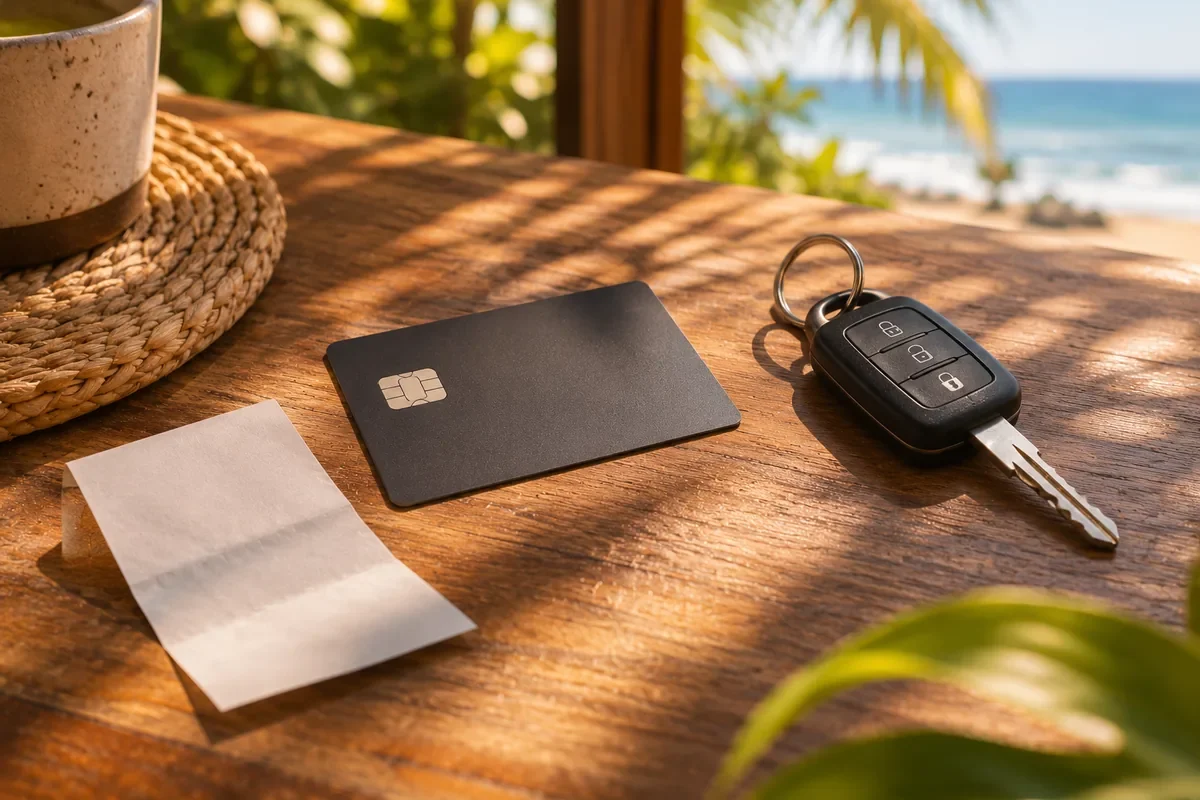
It’s a hold on your card, not a charge. Here’s when it’s requested, when it’s released and what happens if there’s damage.
- Hold: no money leaves your account
- Card: the one you pay with, or another
- 24 h: for the provider to report damage
What it is
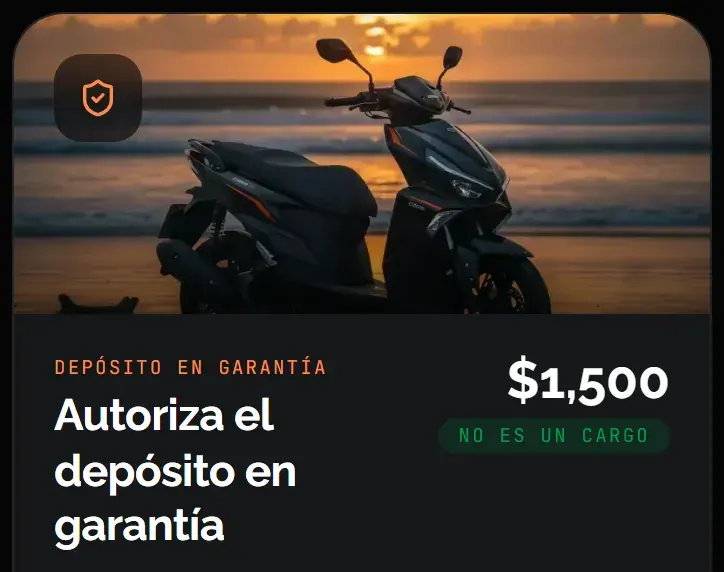
The deposit is an amount held on your card for the length of the rental. It isn’t a charge: the money doesn’t leave your account, it’s just set aside.
The amount depends on the vehicle, and you see it before you pay, next to the rental price.
When it’s requested
- You pay for your booking: The deposit stays pending. If you book for today, you authorize it when you pay.
- We remind you before handover: The afternoon before and the morning of handover day, we ask you to authorize it, by email and in your account.
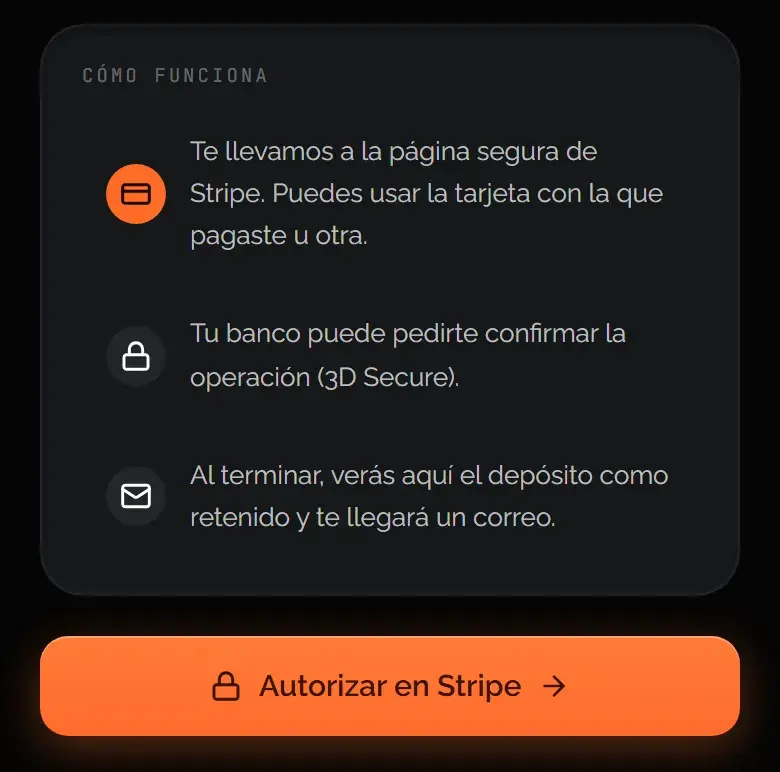
- You authorize it: The amount is held on your card. Without an authorized deposit, the handover can’t take place.
When it’s released
It’s released automatically about 72 hours after you return the vehicle, if no one reported damage. The provider or KORU can release it sooner. How long it takes to disappear from your statement depends on your bank.
If the provider reports damage
The provider has 24 hours after the return to report it, with photos (48 hours if their contract with KORU predates the current version).
You have 48 hours from the notice to respond from My rentals. If you don’t respond, that isn’t taken as acceptance: KORU reviews it. If the amount is over 3,000 pesos, KORU reviews it before it’s applied.
Learn more: How refunds work
Was this helpful?
Related articles
- Guide · GuestHandover day: QR, photos and dashboard
What happens when you get the vehicle and what you need to do.
- Guide · GuestHow you pay for your rental
By card, online, when you confirm your booking.
- Guide · GuestHow refunds work
It goes back to the card you paid with, in 5 to 10 business days.